Be yourself; Everyone else is already taken.
— Oscar Wilde.
This is the first post on my new blog. I’m just getting this new blog going, so stay tuned for more. Subscribe below to get notified when I post new updates.
Be yourself; Everyone else is already taken.
— Oscar Wilde.
This is the first post on my new blog. I’m just getting this new blog going, so stay tuned for more. Subscribe below to get notified when I post new updates.

Lee Smith was born in Australia in the 1960`s. He has worked in the film industry since the 80`s. He first started as a sound editor before he went into film editing. Lee was best known for his work when he worked with peter weir who is an Australian film director and Christopher Nolan who is a film maker best known for doing a lot of films for DC. When Lee worked with Nolan, they did the film Dunkirk in 2017. Lee was awarded the Academy Award for Best Film Editing for the film.
Analogue editing was what editors had to do before the technology that is available today. What they had to do was take the positive copy of the film negative and feed it through a machine, they would also have to cut the film by hand.
Digital is when editing in the 80`s editing was combined with computer technology. It moves all editing to the computer.it allows the editor to edit the footage together and help ad affects such as transitions.
Following the Action and Multiple Point of View is when the camera follows what is happening on screen. It is used when a film has a lot of action or movement that is happening in a scene. This technique is so that the audience can follow the action and helps the shot stay focused on the subject. It is used to help highlight other aspects in a scene, so the audience sees more action rather just a linear narrative. For example, in the film the mission impossible: fallout, the fight scene in the men’s toilet where they have to fight to scan a man’s face for a mask. This fight scene is very fast cut and we stay with the fight, but we jump to different camera shots and angles. Close ups of their faces to see their expressions. And wide shots when they fling each other into walls to see the damage they are doing in the toilets and to themselves.
Camera editing is the technique when you shoot scene in order of when it is to be in the film, instead of editing it after shooting. Then leaving the edit already complete and no editing software needed as all editing is done on the camera. You can do this by filming in single camera, so all shots are on one camera so no editing to put all the shots into a sequence. Camera editing is normally done on lower budgeting films or homemade movies. It is very simple and easy that it can be don’t by anyone as you don’t need editing software to do this.
D.W. Griffith was an American film director. He was born in 1875 in n LaGrange, Kentucky. He grew up hearing his father’s love war stories, which shaped his movies in the future. At first, he wanted to be the one in front of the camera and writing the stories. But as he set out to peruse this career, but he was unsuccessful. Griffith was offered a job in a new motion picture at the Edison Company which he didn’t really wont but was offered a different role as to become a director at American Mutoscope & Biograph. After he directed over four hundred and fifty short films.
Here is a list of some of his productions:
Shot variation is using a variety of different sequences off shots using movement in a film. They include the long shots mid shots, close ups and extreme closeup. The different shots have a purpose in the film and affect the viewer. They can also keep scene more interesting as they focus on all angles instead of one point of view.


Shot variation is used in a lot of action films. It is good when there is a fast pace scene in a production. Some films have a high number of cuts in a short space so if they are all thee same angle it makes it boring, but when there is a variation of shots it helps to fasten the pace of the film.
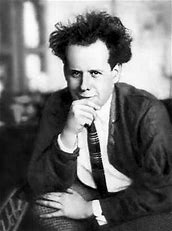
Sergei Eisenstein was Russian film director, he directed the films.
Sergei was most known for the use of montages. But when he moved to do other projects, they all seemed to fail, after that no one wanted to work with him. Montages is now a common technique that is in films. A montage is when a film takes a series of short shots or pictures and puts them together, they do this so that it condenses time down in a story. They can be used to show progress in a character or a journey. For example, one of the most famous montages out there is the one where Rocky is preparing for his fight with Apollo Creed.
Manipulation of diegetic time and space is the editing technique when time is portrayed un-usually it can be used in films and music. It can be flashbacks, flashforward and the speed either making it slow down or speed up the film that it features in. For example. They could film hours of getting ready for a night out of a date, and compress hours into seconds. Another example when a character is growing, they put years into an hour or half an hour. Editors do this so that they can make a storyline of a film move along quicker.

The Lumière Brothers where French inventors, son of Antoine Lumière who had a photographic business. The brothers where pioneer manufactures of photography equipment. They invented the Cinématographe an early motion – picture camera and a projector. With their new equipment the brothers created the film la sortie des ouvriers de l`usine Lumiere. But when translated the name is workers leaving the Lumiere factory. Here it is if you want to watch it:
Most of the film that the brothers did where mostly of everyday life of France. The Cinématographe took individual fames of a scene and past it in a roll of film when each cell was exposed. The cameras exposures rates where the rat of 16 frames per second. This is what the Cinématographe looked like.
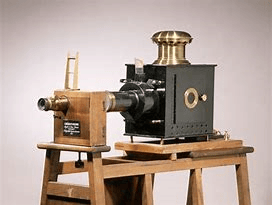
Editing began when the first motion-cameras that were invented in the 1890`s. one of the first was the Cinématographe, invented by the Lumiere Brothers. Editing was limited when it first began, as it didn’t have the technology that is available to editors today. Productions where mostly one continues line of film, with no cuts and mostly featuring the same thing. In the early days of editing the cutting proses was seen as women’s work, which is why when looking at pictures it was mostly or all women in the room cutting rolls of film.
Here is a small list of early productions:
Have a WordPress.com account? Log in now.

